Construction is complex enough – but what happens in an institution such as a school where operations must continue during major build projects?
With live environment builds on the rise in Australia, as part of a $10 billion non-residential building boom, specialised strategies are needed to ensure minimal disruption of daily operations.
This is creating a clear niche for construction firms with specialist live environment build expertise.

ABS building approval data released last month shows the value of non-residential building rose 14.4% to $9.93 billion. With capital constraints and land cost considerations, it can be appealing for commercial and institutional entities to expand on their existing footprints.
According to Rohrig Constructions NSW General Manager Adam Ashcroft, live construction projects have complex logistical challenges which must be overcome using careful programming and innovative solutions.
“Completing a complex project in a busy operational environment requires precision and planning to keep those on site safe and to minimise disruptions,” Mr Ashcroft said.
“It’s a unique skill to be able to carry out major construction projects in spaces that can’t simply be shut down, for example schools, hotels, clubs and medical facilities.
“These projects require specialist construction knowledge so that teaching, trading or care delivery are not disrupted. It is critical to focus on safety, staging and stakeholder management, with clear and early communication an important part of planning,” he said.
Custom Solutions for Live Environment Education Builds
Rohrig has just completed its largest education project to date, delivering the centrepiece Bryson Building for the growing campus at William Clarke College in Kellyville NSW.
Rohrig provided design management from post-tender through to construction on the four-storey 112-metre-long facility featuring collaborative learning spaces, libraries, canteen and café, staff amenities, a large undercover gathering space and a multi-purpose rooftop venue.
“Safety, diversion of live services and careful isolation of work areas was paramount. We installed two custom pedestrian bridges over the vehicle entry point plus a load rated tunnel through the middle of the site for the duration of the project allowing access though the heart of the college for students and staff,” Mr Ashcroft said.
“At William Clarke College, our Rohrig site team used a tower crane with permanent boom pump to increase productivity. We divided each floor into three concurrent construction work fronts to maintain continuous momentum and productivity with the subcontractors, whilst reducing the timeframe of the project.”
The Bryson Building’s façade is a striking combination of glazing, cladding, masonry and patterned screens, highlighted by full-height curtain walls and cantilevered exposed concrete staircases enclosed in glass balustrades.
The project was built to a 5-Star Green Star standard, demonstrating excellence in sustainable design, construction, and environmental impact. Green concrete and recycled steel reinforcement was used throughout construction.
Rohrig also utilised its augmented reality capability, allowing school staff to “walk” through the hospitality spaces at a 1:1 scale before final sign-off on the project.
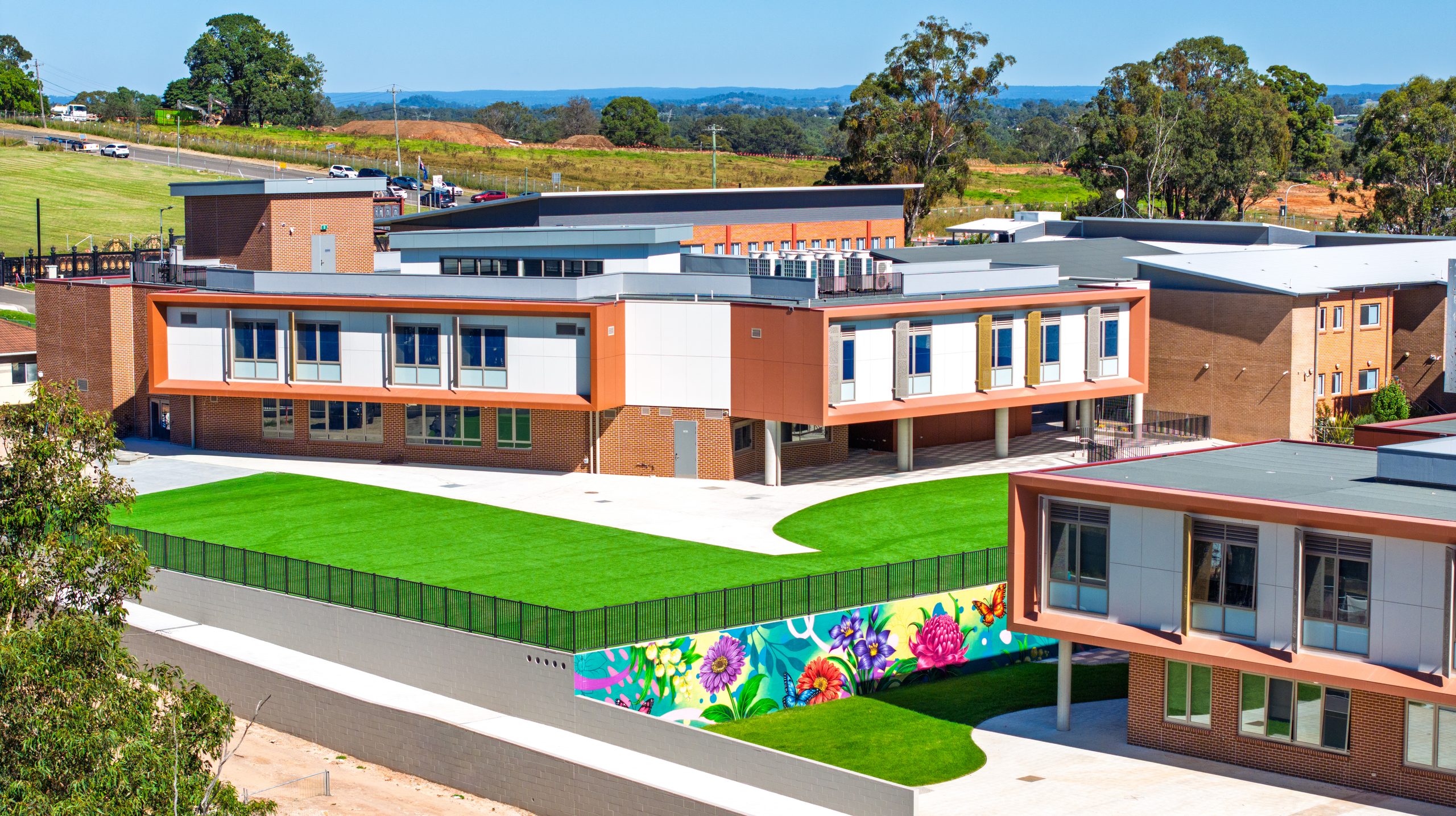
Other challenging live environment projects were Rohrig’s work on the accelerated multi-stage expansion of Al-Faisal College in Liverpool NSW.
By working concurrently on stages 3 and 4 of Al-Faisal College’s masterplan, two state-of-the-art educational buildings were constructed.
“Delivery was fast-tracked and working concurrently on the two stages allowed us to introduce program efficiencies that save time and money,” Mr Ashcroft said.
On the Al-Faisal College project, all major concrete pours and heavy deliveries were sequenced outside of peak pick-up and drop-off times and all service shutdowns to the existing school buildings took place after hours.
Mr Ashcroft said builders working in live environments need to bring a nimble mindset and flexible approach to the projects, so that clients can trust them to make crucial adjustments on the run.
“In practical terms, it’s important in live environment construction to work with a builder who identifies issues early and helps the client make better decisions on solutions that protect time, cost and operational continuity – and then delivers on the project with certainty,” he said.
Related Articles