Parramatta and The Hills Shire have ranked as NSW’s top YIMBY (‘Yes In My Back Yard’) councils, according to the latest ABS data revealing which local government areas (LGAs) are approving the most new homes.
Over 2,000 new dwellings were approved within these councils over the 12 months to April 2026, placing them among the top ten nationwide.
Other top councils for approved new dwellings in NSW included Canada Bay (1,770), Wollongong (1,363) and Sutherland Shire (1,089).
These new homes come as part of an acceleration in the state government’s approval of new housing developments, according to Apartments.com.au CEO Mike Bird.

Mr Bird says governments are stepping in “more aggressively than ever before” to get projects across the line, after years of being held up by councils.
“For years, supply constraints in the apartment sector have been driven by a combination of rising construction costs, labour shortages, feasibility pressures, and perhaps most critically, prolonged and unpredictable planning approval timeframes at local council level,” he said.
“That’s why governments are stepping in.”
NSW’s Top YIMBY Councils
Rank Council Dwellings Approved 1 Parramatta 2,473 2 The Hills 2,348 3 Sydney 1,854 4 Canada Bay 1,770 5 Wollongong 1,363 6 Bayside (NSW) 1,187 7 Sutherland 1,089 8 Inner West 1,055 9 Canterbury-Bankstown 1,035 10 Ryde 1,033
New semi-detached, terrace, townhouse & apartment dwellings approved from May 2025-Apr 2026. Source: Apartments.com.au/ABS Building Approvals.
In NSW, Mr Bird said the state government had introduced a series of reforms designed to fast-track housing delivery, particularly around transport hubs like Parramatta and Sydney.
“The Housing Delivery Authority pathway and Transport Oriented Development reforms are allowing larger apartment projects to bypass traditional council approval bottlenecks, particularly in precincts surrounding metro and train stations,” he noted.

Apartments.com.au CEO Mike Bird
Additionally, these development-dense councils are among those most capable of handling the state’s migration intake over the past year, Mr Bird notes.
“The off-the-plan sector is one of the few areas capable of delivering housing supply at the scale required to accommodate Australia’s population growth, migration intake, and changing household structures,” he said.
“Because detached housing alone cannot solve the problem, particularly in capital cities, governments are increasingly aligning planning policy, infrastructure investment and housing incentives around accelerating apartment supply.”
The NSW government recently allocated $6.6bn of the state budget toward social housing.
QLD councils top national rankings
Nationwide, Gold Coast and Brisbane emerged as the biggest YIMBY councils in Australia.
Over 5,000 new dwellings were approved in these councils, revealing the significant gear shift towards driving new homes in Queensland.
Nationally, Mr Bird said the federal government’s target of delivering 1.2m new homes over five years cannot be met without a significant acceleration in apartment development, particularly in Sydney, Melbourne and Brisbane, where population growth continues to outpace housing delivery.
Australia’s Top YIMBY Councils
Rank Council State Dwellings Approved 1 Gold Coast QLD 5,610 2 Brisbane QLD 5,535 3 Melbourne VIC 3,875 4 ACT* ACT 3,513 5 Parramatta NSW 2,473 6 The Hills NSW 2,348 7 Sydney NSW 1,854 8 Canada Bay NSW 1,770 9 Moreton Bay QLD 1,761 10 Sunshine Coast QLD 1,563
New semi-detached, terrace, townhouse & apartment dwellings approved from May 2025-Apr 2026. Source: Apartments.com.au/ABS Building Approvals.
“The broader message from government is that housing supply is now viewed as an economic priority rather than a local planning issue,” Mr Bird says.
“Governments are not only encouraging new housing delivery but are also actively restructuring planning systems, so projects can proceed faster and with greater certainty than in previous cycles.”

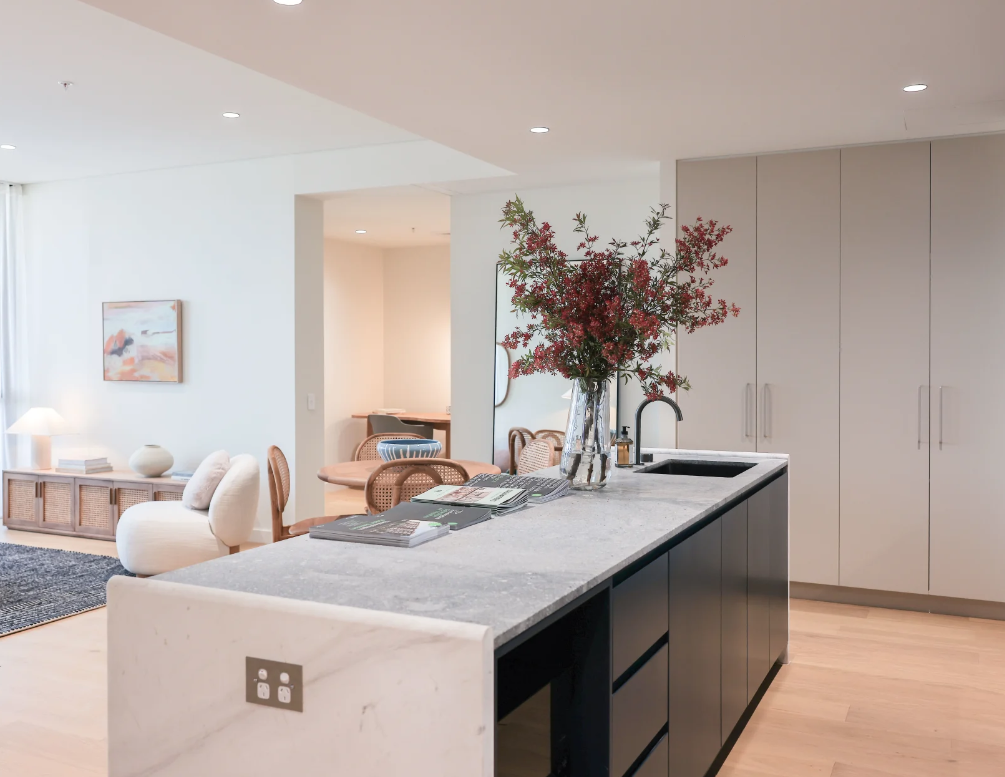
Mayfair on Penrith, Penrith, NSW
For buyers and investors, Mr Bird said government policy would continue to be an important market indicator.
“The next phase of Australia’s housing market is likely to be defined not just by demand, but by which states and cities can deliver supply quickly enough to keep pace with population growth and affordability pressures,” he said.
Related Articles