Industrial Asset in Adelaide’s Inner South Sells for $21.5M in Off-Market Deal
6 August 2026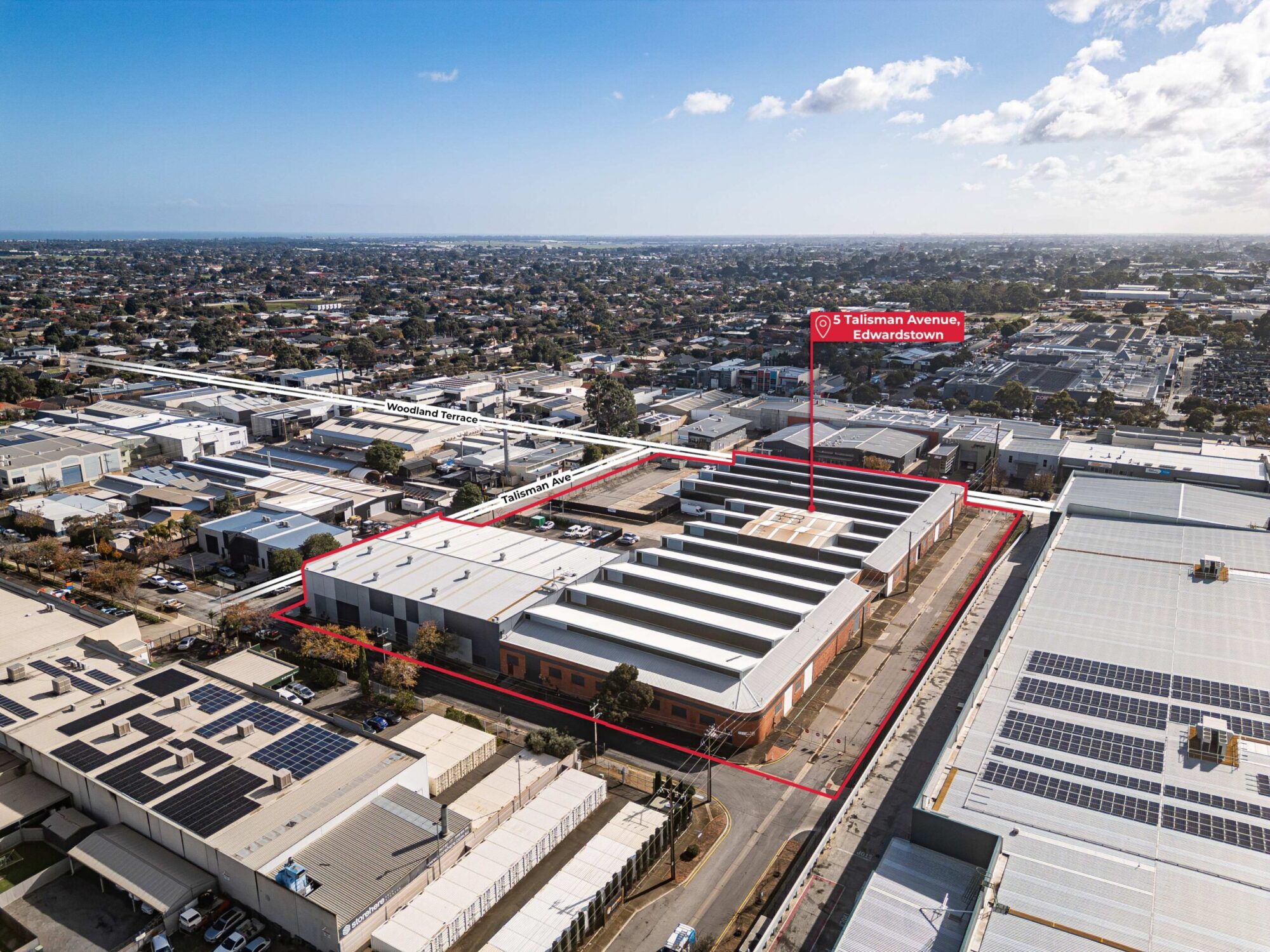
An institutional grade industrial asset occupied by the South Australia Police (SAPOL) in Adelaide’s inner south has sold for $21.5 million, underscoring continued investor demand for well-positioned, income-secure industrial property.
The property at 5 Talisman Avenue in Edwardstown, situated behind Bunnings Edwardstown around eight kilometres south of the Adelaide CBD, comprises a 15,670 square metre island site with a total building area of 9,856 square metres.
The facility incorporates a mix of refurbished and newly constructed warehouse space, together with ancillary office and mezzanine accommodation.
The asset is fully leased to the State Government of South Australia via SAPOL, a long-term occupant of the site.
It has been purchased by Adelaide-based property syndicate Curated Capital in an off-market transaction negotiated by Knight Frank’s Max Frohlich and Ryan Mills on behalf of the vendor, MA Financial.
The asset generates a passing net income of approximately $1.02 million per annum, which is around 35 per cent below current market rental levels, offering material reversionary upside. SAPOL represents a deeply entrenched covenant, given the strategic inner south location and the purpose-built nature of the improvements, further underpinning the long-term security of income.
The property occupies a prominent position just off South Road, within the established Edwardstown industrial precinct. The location benefits from proximity to major arterial routes and surrounding large-format retail, industrial and residential amenity, enhancing its appeal to both occupiers and investors.
Mr Frohlich said the transaction highlights demand for functional industrial assets offering strong underlying land value and secure government-backed income streams.
“This sale demonstrates the continued depth of investor appetite for well-located industrial assets in infill metropolitan markets, particularly those underpinned by high-quality tenancy profiles,” he said.
“The property offers a rare combination of scale, underlying land value and security of income, with a secure government covenant, fixed annual rental growth and meaningful rental reversion. Assets with these attributes are increasingly difficult to replicate, and capital is responding accordingly.”
Mr Mills said: “Adelaide’s industrial market continues to perform strongly, with vacancy of around two per cent across the wider metropolitan market, among the lowest of any major Australian market.
“Conditions are incrementally tighter in the inner south submarket, where constrained supply continues to meet strong occupier demand, and incentives remain the lowest of the major capitals nationally, supporting continued rental growth across key precincts.
“The inner south has seen some of the strongest growth in land values in Adelaide’s industrial market.
“The supply side of the precinct has also shifted structurally. The $15.4 billion River Torrens to Darlington Project, the largest infrastructure undertaking in South Australia’s history, has required the acquisition of more than 500 properties along the South Road corridor, permanently withdrawing land from the market and displacing occupiers into an already tightly held precinct.
“Infill locations such as Edwardstown are particularly sought after, given their proximity to the CBD, access to major transport corridors and limited availability of comparable assets.”
Alessio Roscio of Curated Capital said the acquisition reflected the group’s conviction in holding well-located, inner-ring land for the long term.
“Our strategy is straightforward: we intend to extend SAPOL’s tenancy and hold the underlying land,” he said.
“Island sites this close to the CBD rarely come to market, and in a tight infill precinct like Edwardstown, land of this scale simply isn’t being replaced.
“We’re comfortable taking a patient, long-term view on the real estate while the government tenancy continues to underpin the holding.”
Related Articles