The land lease community sector will undergo its biggest shake up in four decades, with ASX-listed developer GemLife to launch Australia’s first vertical lifestyle resort on the Gold Coast this year, after patenting an innovative new construction methodology.
GemLife Managing Director and Group CEO Adrian Puljich said it would enable communities traditionally confined to broadacre greenfield sites to be built on inner city and infill parcels, helping address Australia’s critical land and housing supply shortage.
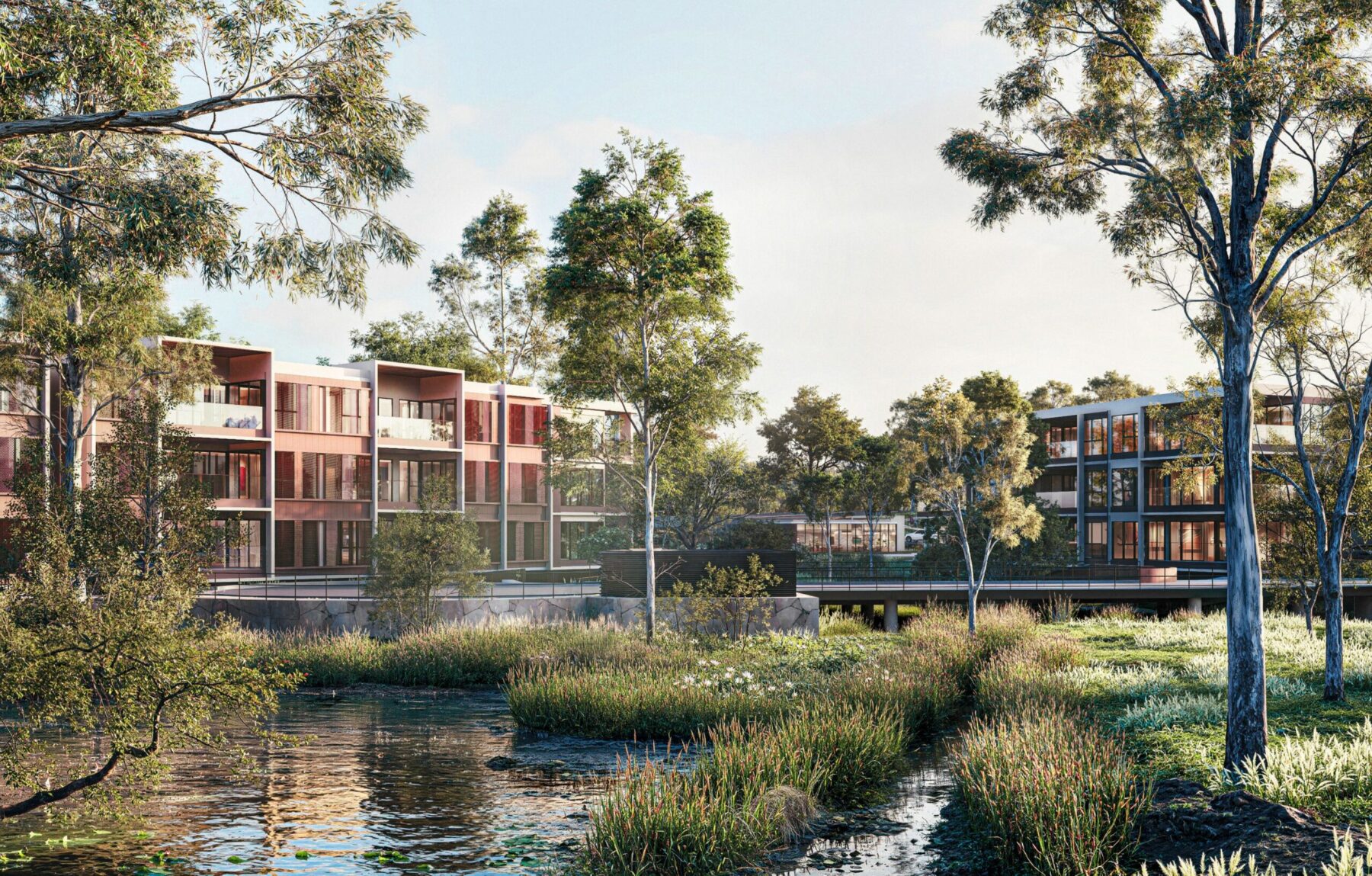
The group has been granted a 20-year patent over the new methodology for modular multistorey building, which it will roll-out initially at its 215-apartment GemLife Currumbin Waters. External works will start mid-year, with market launch and residential construction anticipated to commence in late 2026.
“We’re working towards lodging a development application for over 500 apartments on a second Gold Coast site in the next six months, and are investigating other opportunities, where 1000-plus apartments could be possible,” said Mr Puljich.

“We believe this is the single biggest innovation in land lease living to date, redefining what these communities look like, where they can be developed, and who will buy them, opening the door to downsizers and retirees who prefer apartment living.
“It will see the fast-growing land lease community sector move from horizontal communities to vertical living, helping address Australia’s land constraints and the growing demand for low-maintenance housing in established urban areas.”
Land lease communities are a housing model where over-50s purchasers own their home and rent the land through a weekly site fee covering all maintenance, management and security. Eligible homeowners can apply for Government Rent Assistance.
To comply with legislation, apartments in a vertical land lease community must be moveable – a challenge GemLife has spent more than a decade researching and developing a solution for.
Mr Puljich said while the initial buildings at GemLife Currumbin Waters were low-rise, the patented methodology had the potential to scale significantly over time, opening the door to high-rise applications.
“This means we can explore land lease communities in locations that simply weren’t possible before,” he said.
“To date, our communities have generally been developed on a minimum 15-hectare parcel, whereas an apartment development requires about four hectares or less and could be built on contoured or more challenging terrain.”
GemLife received approval for its $500 million GemLife Currumbin Waters, on Galleon Way, in late 2024. Over the past year, it has worked with Brisbane-based MAS Architecture to further perfect the design, resulting in final enhancements, which are currently before Gold Coast City Council.
The up to 200sqm three-bedroom apartments are designed to be constructed – and deconstructed – in multiple modules.
“While modular in construction, the apartments will feature a high-quality architectural design, premium finishes and a built form comparable to a traditional residential development,” said Mr Puljich.
“We plan to construct the Currumbin Waters apartments on site but see the potential as the technology scales to build the modules in a factory environment, which could enhance efficiencies.
“The building structure and amenities will be permanent, but the apartments will be relocatable. The building’s façade is designed for disassembly, enabling the apartments to be removed in the same sequence the modules are installed.”
GemLife Currumbin Waters will feature nine individual buildings, including a four-level building, seven three-level buildings and a separate country club.
A significant 70 per cent of the 13.854-hectare site will be dedicated to green open space, which will be preserved and rehabilitated, including a 7.7-hectare parcel that will be handed back to Council as protected public open space.
Related Articles