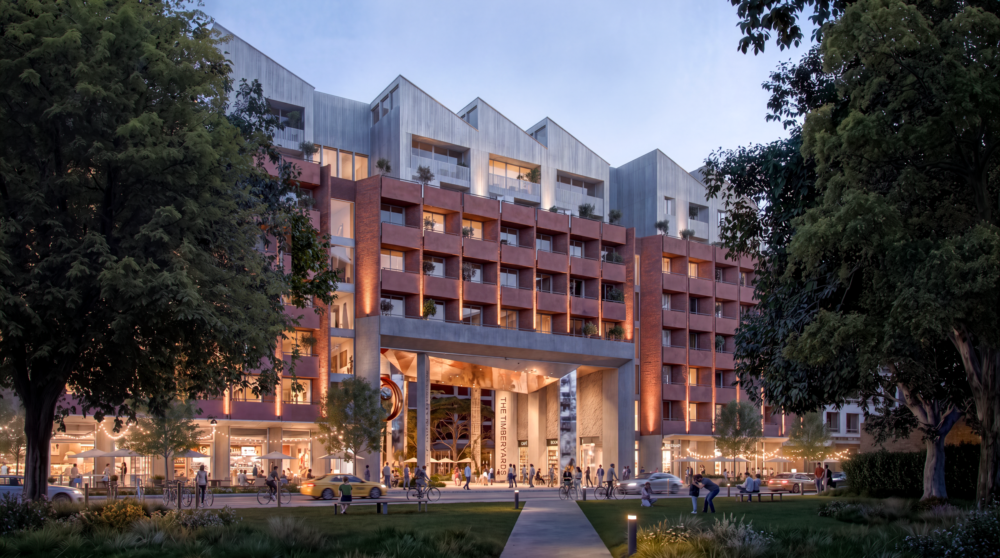

Global institutional investors drive two-thirds of student housing transactions as region emerges as preferred international education destination.
The Asia Pacific student housing sector is experiencing a fundamental transformation, with transaction volumes tripling since 2022 as cross-border institutional investors increasingly dominate the market. According to JLL (NYSE: JLL), the surge in cross-border investment activity reflects a broader institutional repricing of the sector, driven by structural demand dynamics and persistent supply constraints that are reshaping the risk-return profile of student housing in Asia Pacific.
In 2025, cross-border investors represented approximately two-thirds of total student housing transaction volume, with activity concentrated primarily in Australia, the region’s most internationally accessible market. By contrast, domestic capital accounted for 54% of overall Asia Pacific living sector transactions in 2025, showing the global appeal of the student housing sector.
JLL data and analysis show that private equity dominated regional investment over the past two years, with Australia absorbing the majority of capital deployed. However, H1 2026 marked a significant shift as listed REITs emerged as the most active buyers in the segment, signalling growing confidence from traditional real estate capital.
“Structural demand is and will continue to establish student housing as one of the most confident long-term investment plays in Asia Pacific. Our conviction is reinforced by the fact that the buyer pool has steadily diversified since 2022, with increased participation from developers, both listed and unlisted REITs, fund managers, and education companies. Fundamentally, broadening of the capital base is consistent with the asset class transitioning toward institutional mainstream status, moving beyond its origins as a specialist, niche investment opportunity,” says Lauren Hetherington, Senior Director, Living Capital Markets Asia at JLL.

JLL believes that the investment case for Asia Pacific student housing will be further supported by durable demographic and policy shifts reshaping global student mobility. The number of internationally mobile students has nearly tripled over two decades, from 2.5 million in 2002 to 7.3 million in 2023. This population is projected to reach 9 million by 2030.
While Western Europe and North America continue to host 49% of global mobile students, East Asia and the Pacific have emerged as significant destinations, now accounting for 19% of the total.
Asia’s rising prominence as a study destination is underpinned by structural competitive advantages. The region now offers more than 20,000 English-taught programmes and has surpassed all other regions in the 2026 QS World Rankings for the number of globally ranked universities. Furthermore, the demand surge is occurring against a backdrop of structural supply shortages. Unlike cyclical inventory gaps, the region’s accommodation deficit is deeply embedded, supporting rent growth independent of broader market timing and providing downside protection for investors.
Despite the region-wide momentum, JLL’s analysis reveals that Asia Pacific’s student housing markets are maturing at different pace, requiring investors to adopt market-specific strategies. For the foreseeable future, Australia will remain as the gateway market for global capital investing in student housing. Other markets across the region present opportunities for scale and early-mover advantage, but require differentiated approaches that account for varying levels of market development, regulatory frameworks, and operational complexity.
“The confluence of redirected student mobility, proactive government policy, structural supply constraints, and Asia’s strengthening position in global higher education creates a foundation that extends beyond near-term market conditions. As international education policies in traditional destinations remain restrictive and Asia Pacific nations continue to prioritize education sector growth while expanding their institutional infrastructure, the investment case for purpose-built student accommodation in the region appears increasingly compelling,” says Hetherington.
The diversification of the buyer pool, from specialist operators to mainstream institutional capital including REITs, fund managers, and diversified investors provides further evidence that student housing is transitioning from a niche alternative asset to a core component of institutional real estate portfolios across Asia Pacific.
Read more here – https://www.jll.com/en-sea/insights/student-housing-in-asia-pacific.
Related Articles