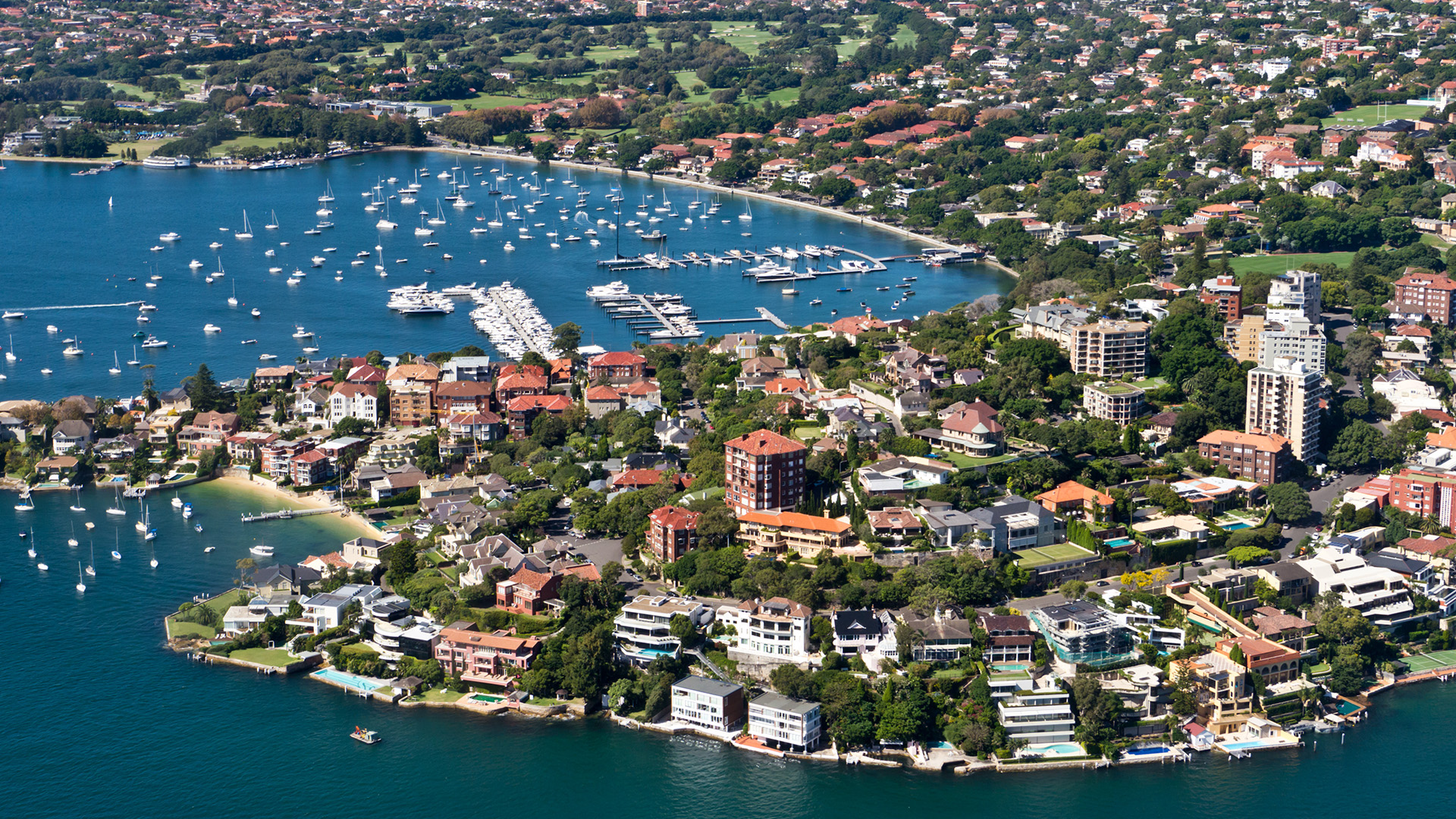
Rose Bay, one of Sydney Harbour’s most affluent suburbs, is facing the prospect of rapid transformation as developers line up apartment projects that could significantly lift population density within a few years. According to Australian Financial Review, at least 17 apartment applications are already awaiting approval as builders move swiftly to capitalise on NSW planning reforms introduced last year.
If all current proposals are approved, about 460 new apartments could replace roughly 50 existing homes, potentially adding close to 1,000 residents to a suburb that had just under 10,000 people at the 2021 census. Further development is also likely, with multiple amalgamated sites now on the market as homeowners seek to realise rising land values amid fears of prolonged construction disruption.
The changes stem from the NSW Labor government’s low- and mid-rise housing policy, designed to boost housing supply in inner and middle-ring suburbs. Rose Bay, like Mosman and Double Bay, has been designated a town centre suitable for denser development. Supporters argue the policy is essential to addressing Sydney’s housing shortage, while critics see it as a blunt instrument imposed on suburbs with fragile infrastructure and complex geology.
Among residents’ chief concerns is Rose Bay’s shallow water table and soil composition. Locals point to reported cases of flooded basements, structural cracking and even partial building collapse, issues they fear could be exacerbated by deep excavation for basement parking. In one case, residents crowdfunded an independent geotechnical assessment of a major Dover Road project involving an eight-storey building with two basement levels.
That report warned the development did not meet council controls intended to protect neighbouring properties from groundwater drawdown, drawing comparisons with the failures that rendered Sydney’s Mascot Towers uninhabitable in 2019. Residents say the risk is not aesthetic or financial, but structural and potentially irreversible.
Developers strongly dispute those claims. Separate geotechnical advice commissioned by the project proponent concluded the development would not adversely affect groundwater flow or surrounding structures if managed correctly. The developer has said it will comply with all statutory requirements and ensure construction is overseen by experienced contractors.
Beyond safety, there is debate over who will benefit from the new apartments. Some residents describe the projects as catering primarily to wealthy downsizers rather than improving affordability. Local leaders argue that while applications may technically meet the state’s definition of affordable housing, rental prices are still set against market rates, limiting real access for lower-income households.
Woollahra Mayor Sarah Dixson has criticised the state for failing to account for the cumulative impact of multiple excavation-heavy projects in a single suburb. While acknowledging developers are operating within the rules, she says the policy risks reshaping Rose Bay faster than supporting infrastructure can keep pace.
NSW Planning Minister Paul Scully has rejected calls for exemptions, stating that all parts of the state must contribute to increasing housing supply. He has, however, said that geotechnical studies and community concerns will be closely examined as part of the assessment process to ensure development proceeds safely.
As approvals loom, Rose Bay finds itself at the centre of Sydney’s broader housing debate: balancing the urgent need for more homes against the long-term risks of building quickly in geologically sensitive, tightly held suburbs.
Related Articles