More than $500 million flows into northern industrial land as data centres and scale reshape investment priorities.
Melbourne’s northern industrial corridor is entering a new stage of market evolution, with more than $515 million in large-format land transactions already exchanged or under exclusivity in 2026 specific to traditional industrial end product, according to Colliers’ latest Melbourne North Land Analysis.
The resurgence reflects a decisive shift in buyer focus toward scale, infrastructure access and long‑term relevance, rather than short‑cycle development opportunities and is marking a clear uplift on activity recorded across 2024 and 2025.
“What we’re seeing in Melbourne’s north isn’t a withdrawal of demand, but a clear re-pricing of certainty,” said Mitch Purcell, Director | Industrial & Logistics at Colliers.
“Capital is targeting larger, well-located sites where scale, infrastructure alignment and long-term optionality can be secured, particularly where planning and delivery risk is more clearly defined.”

Scale and certainty drive super‑lot activity
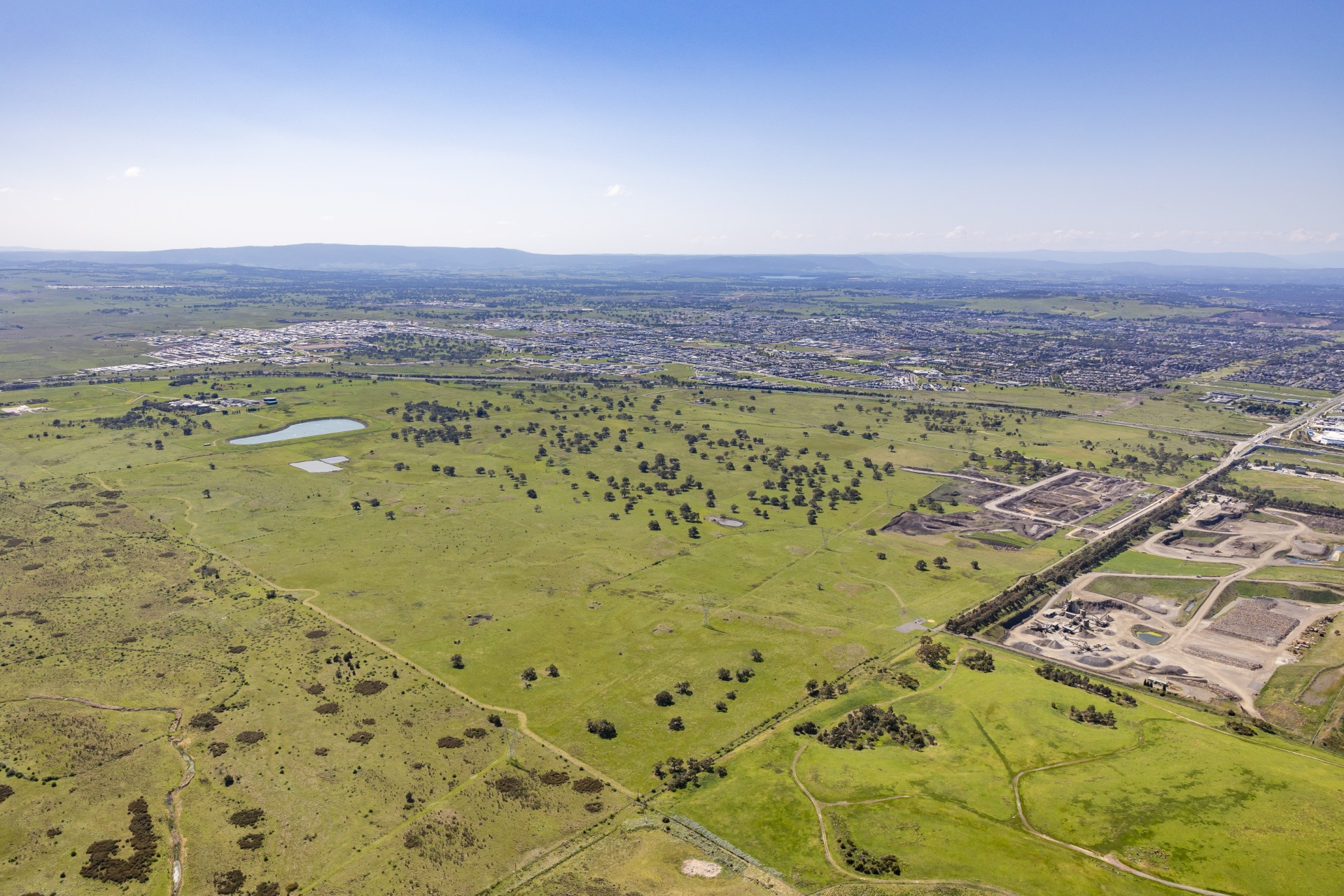
That shift is best illustrated by Yale Investments’ $275 million acquisition of O’Herns Logistics Park in Epping, the largest greenfield transaction recorded in Melbourne’s northern corridor in recent years, which will unlock close to 100 hectares of net developable land in one of the city’s fastest‑growing industrial precincts.
Further validation of the market’s long‑term fundamentals has been seen through recent super‑lot transactions at Merrifield Business Park, where owner‑occupier acquisitions over the past 12 to 18 months have achieved underlying land rates approaching $600 per square metre. These deals underscore the premium now being placed on scale, connectivity and proximity to labour catchments, particularly by businesses seeking to consolidate or expand operations in Melbourne’s growth corridors.
Data centres reshape competition for land
One of the most significant structural forces emerging within Melbourne’s northern industrial market continues to be the rapid expansion of the data centre sector, which is increasingly competing with traditional industrial users for serviced land.
In addition to the weight of capital mandated for traditional industrial land use in 2026, there has been over $930 million worth of capital transact unconditionally or enter exclusivity in 2026.
Nick O’Brien, National Director | Industrial & Logistics at Colliers, said, “Demand for data centre infrastructure in Melbourne has accelerated significantly, with the sector’s footprint across the north and west expanding more than 600 per cent since 2020.”
“Land currently under data centre due diligence now represents up to one-third of future industrial land supply over the next three to five years, fundamentally reshaping availability, pricing and competition for traditional industrial users.”
Owner‑occupiers provide stability at the smaller end
At the smaller end of the spectrum – specifically industrial retail lots below 3,000 square metres – Melbourne’s northern market has entered a phase of stabilisation following several years of strong capital growth. Land values increased by a modest 3.37 per cent through 2025, while transaction volumes rose by more than 13 per cent year-on-year, signalling renewed buyer confidence.
Corey Vraca, Colliers Director | Industrial & Logistics, commented, “Lots under 3,000 square metres accounted for around 70 per cent of transactions, highlighting continued demand from owner‑occupiers, SMEs and private investors seeking manageable lot sizes and lower absolute price points.”
“Early activity through the first quarter of 2026 suggests the market is on track for potentially record levels of take‑up this year, particularly across Epping, Craigieburn and Mickleham.”
A more complex, multi‑use northern corridor
As industrial, logistics and digital infrastructure increasingly compete for finite land supply, Colliers expects Melbourne’s northern corridor to continue evolving into a more complex, multi‑use employment and infrastructure zone.
“Melbourne’s north is no longer simply an industrial expansion story. It is becoming a strategically critical employment corridor, and the landholding decisions being made today will play a defining role in who captures value over the next decade,” Mr Purcell said.
Related Articles