Australia’s seniors living sector has cemented its place as one of the country’s most sought-after real estate investment classes, with land lease communities and retirement villages emerging as standout growth segments as demographic pressure continues to build, according to CBRE’s Australian Healthcare & Social Infrastructure team.
“Across land lease communities and retirement villages, the common theme is scarcity,” said Marcello Caspani-Muto, Director, Australian Healthcare & Social Infrastructure at CBRE.
“We are seeing significant depth of capital targeting these sectors, but very few assets of scale and quality are being brought to market.”

CBRE’s 2026 Seniors Living Report highlighted a deepening imbalance between investor demand and the limited availability of high-quality opportunities — a dynamic expected to underpin further pricing growth across both markets as capital continues to gravitate toward defensive, income-secure assets.
Land Lease Communities: Capital Chasing Scale and Certainty
Land lease communities have continued their rapid evolution from a niche residential or caravan park sub sector into a nationally recognised institutional asset class, with annuity style income profiles and strong underlying development economics broadening buyer appetite well beyond traditional private operators.
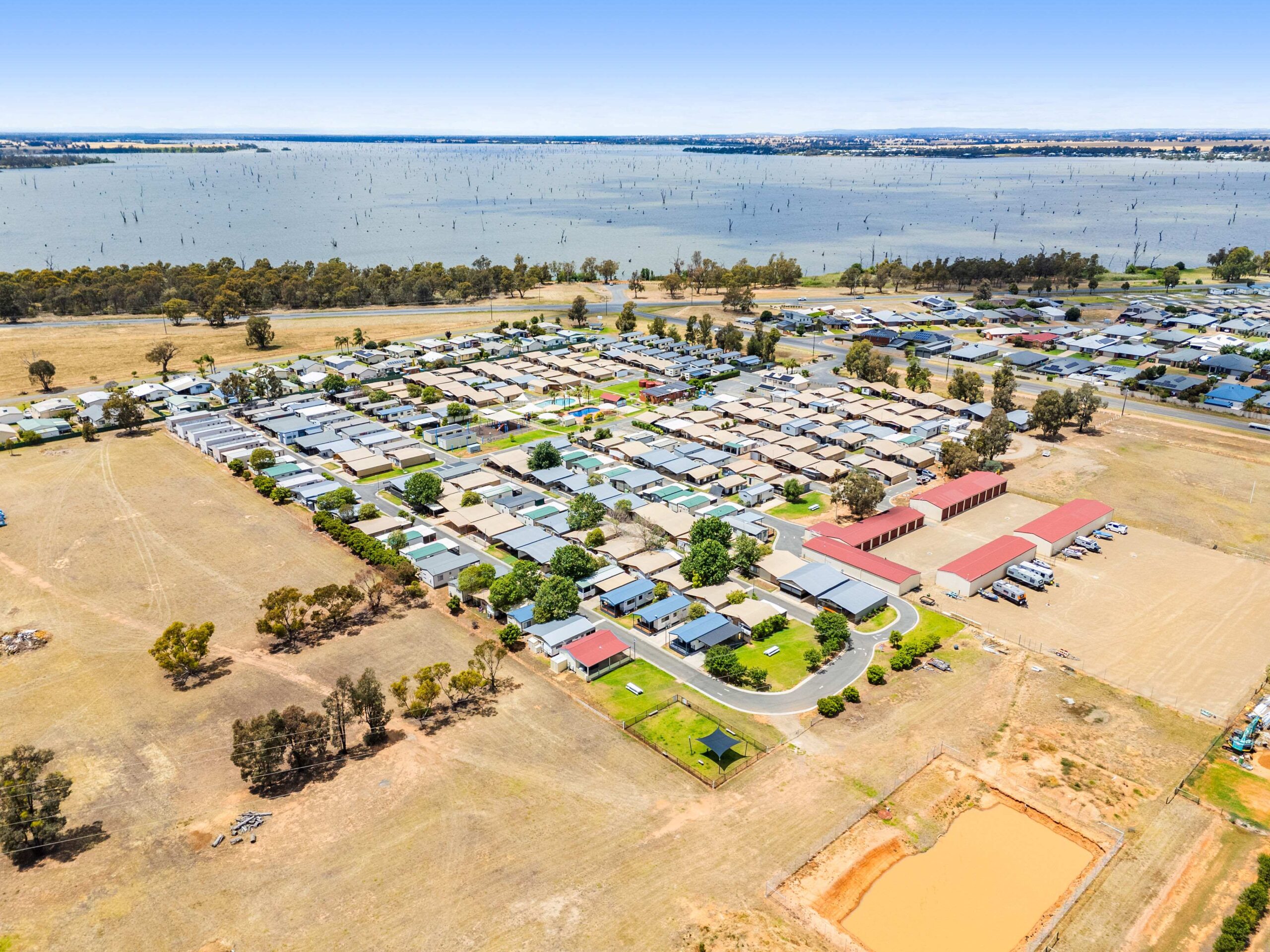
The CBRE Australian Healthcare & Social Infrastructure team — National Director, Sandro Peluso, Mr Caspani-Muto and Senior Director, Jimmy Tat — is currently seeing this demand translate directly into live market activity, including the sale campaign for Sun Country Lifestyle Village at 18 Tocumwal Road, Mulwala, NSW.
Mr Peluso said the campaign has attracted a mixture of syndicates and high net worth private buyers drawn to the asset’s long-term annuity style income stream and future expansion upside.
“Scale land lease communities with genuine growth optionality almost never come to market,” Mr Peluso said. “When they do, they attract strong interest from domestic and offshore buyers seeking long term exposure to the sector.”
The Mulwala asset represents one of the most substantial land lease and lifestyle communities currently offered to the market, combining established recurring income with approved expansion capability — a profile that has become increasingly rare in the current environment.
According to the CBRE report, Australia currently has slightly over 40,000 land lease sites in operation with penetration among over-65s at just 1.0–1.5%, compared to 5–6% for retirement villages. With 150,000 people entering the over-65 cohort each year, approximately 2,500 new occupied sites are needed annually just to maintain current penetration levels — let alone grow it.
Mr Peluso said rising construction costs, planning complexity and limited availability of suitable development land are all constraining future supply and reinforcing the value of existing, well-located communities.
Retirement Villages: Repricing Underway as Supply Lags Demand
In parallel, the retirement village sector is benefiting from sustained occupancy, improving operational performance and a growing recognition of its role within Australia’s broader health, housing and ageing ecosystem.
Mr Peluso said retirement villages are running at approximately 95% occupancy nationally against a forecast shortfall of 49,000 independent living units by 2030, with planning approvals taking anywhere from 365 to over 730 days in extreme cases and new supply projected at only 2,000–2,500 units per year.
“High quality retirement villages are becoming increasingly difficult to replace,” Mr Peluso said. “Extended planning timeframes and elevated development costs mean investors are placing greater emphasis on established villages that can deliver income immediately.”
Mr Peluso noted that refurbishment, repositioning and selective expansion strategies are becoming more common as operators seek to extract value within existing assets, rather than pursue longer dated greenfield developments.
CBRE is also seeing growing interest from offshore and Asian capital, particularly for larger land lease communities and retirement village portfolios, supported by improved awareness of Australia’s regulatory frameworks and long-term demographic fundamentals.
“International capital is becoming far more educated around the nuances of these asset classes,” said Jimmy Tat, Senior Director – Asian Services Desk, Australian Healthcare & Social Infrastructure at CBRE. “There is strong alignment between the long-term income characteristics of seniors living and the objectives of offshore private and institutional investors.”
Scarcity Likely to Sustain Price Growth
While transaction momentum is building, Mr Caspani-Muto said the underlying market dynamic remains unchanged: capital demand continues to outstrip the supply of quality opportunities. Stabilised yields for land lease communities currently sit in the 5.0–5.75% range nationally, supported by net operating income margins of 65–75% during the operational phase, with development returns of 16–20% continuing to attract both domestic and offshore capital.
“Most owners of well performing land lease communities and retirement villages are long term holders,” Mr Caspani-Muto said. “That imbalance between willingness to sell and depth of buyer demand is expected to keep upward pressure on pricing.
“CBRE expects both land lease communities and retirement villages to continue attracting capital as core, long duration real estate investments offering defensive income, inflation protection and demographic certainty.”
Related Articles